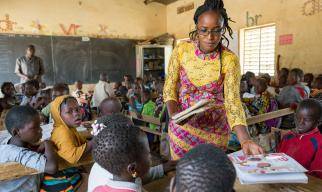
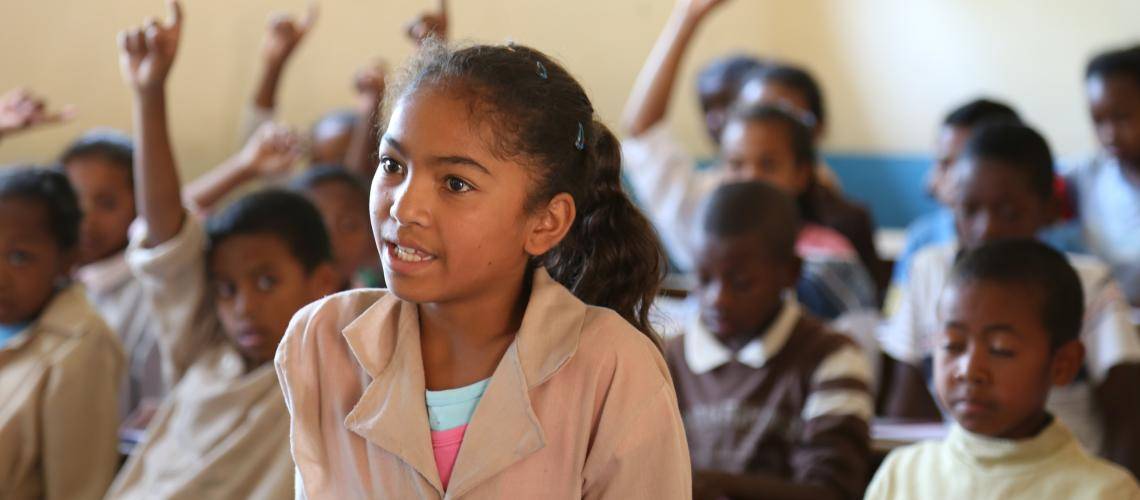
Accessing, completing, and succeeding in school have been major challenges for girls in Africa. Compared to boys, girls are more likely to be out of school, and they face more obstacles to their progress, participation, and learning than boys. COVID-19 has now exacerbated these difficulties by keeping girls away from school for a long period of time, exposing them to early marriages, sexual assaults, and teen pregnancies.
This project seeks to provide education policymakers in Burundi, Madagascar, Mali, and the Democratic Republic of the Congo (DRC) with a proven school model that is gender-sensitive in its design and operation that can be scaled to more effectively support girls’ success in school. The model is designed to equip teachers with knowledge, skills, and attitudes that enable them to respond adequately to the learning needs of girls and boys through the implementation of gender-aware classroom processes and practices. Teachers are trained to learn and adopt teaching practices that engender equal treatment and participation of girls and boys in the classroom and in the wider school community.
The research design integrates both quantitative and qualitative methods and approaches. To assess the model’s effectiveness, the project will compare schools that have holistically applied the model (in Burundi and Madagascar) with those that implemented specific parts of the model in Mali and the DRC.
Project Stats