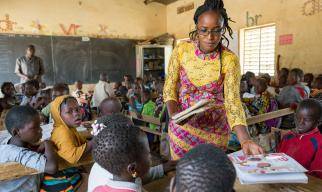
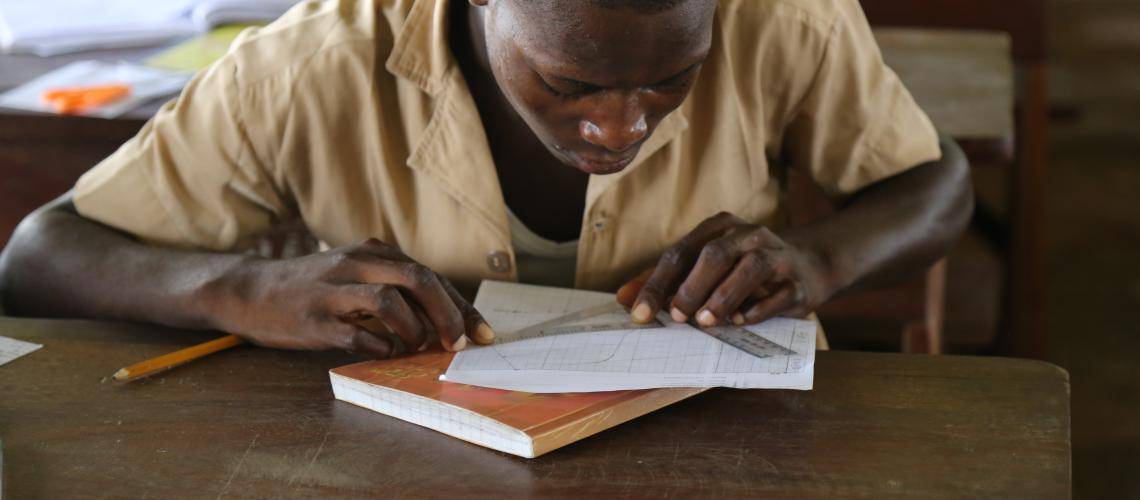
African countries are confronted with a myriad of educational challenges, including, among others an insufficient number of qualified subject-teachers. This is particularly true for teachers of science, technology, engineering and mathematics (STEM).
This project seeks to improve equitable and quality learning environments for all learners through the development of STEM learning materials, relevant pedagogy and curriculum, and ongoing training of teachers in Benin, Cameroon, and the Democratic Republic of the Congo (DRC).
The project will be implemented through phases including needs assessment and curriculum development, development and dissemination of innovative digital contents and courses for both students and teachers. These elements will be piloted and refined with the view to scaling them in the education systems of the three countries. In adapting the material and approach to the three national contexts, the project will specifically address the need for both low and higher tech solutions, cost-effectiveness and multilingual content.
The project will be led by the Cameroon Baptist Convention Education Department, in consortium with non-governmental organizations in the Democratic Republic of Congo and Benin, the Emmanuel Community, HEAR Congo, and Trois Soeurs Education Fund. The consortium will be supported by two North American partners and a Japan-based EdTech foundation (NextGenU., a portal to free and accredited higher education, Scientific Animations Without Borders (SAWBO), which provides multi-lingual, inclusive educational content for STEM and EDGEofEducation in Japan.
Project Stats