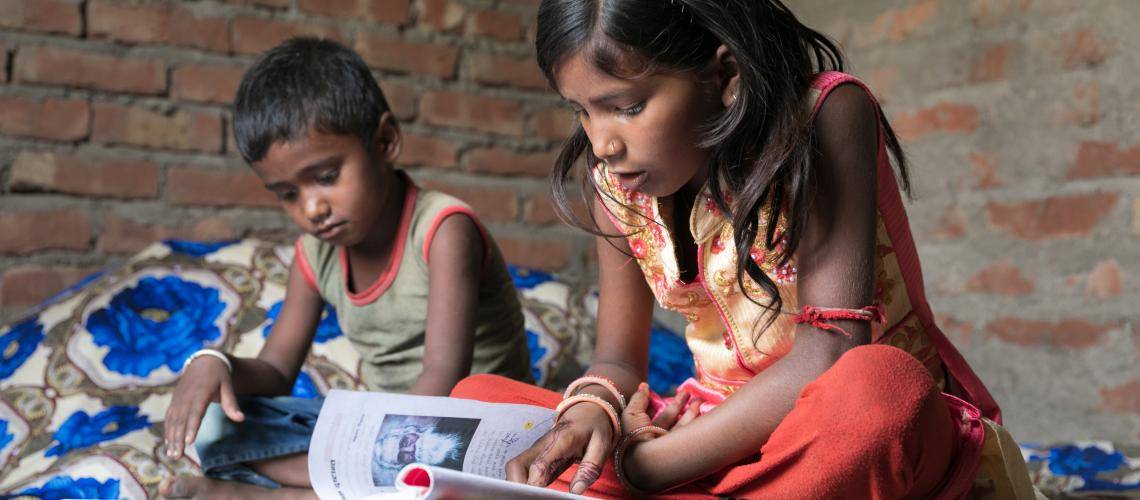
In South Asia, one of the significant challenges to achieving inclusive and equitable quality education for all (Sustainable Development Goal 4) is the large number of children who are out of school or at risk of dropping out. UNESCO estimates show that nearly 30 million children in South Asia are not in school. Of these, an estimated 4.65 million are in Bangladesh, Nepal, and Bhutan.
The Governments of Nepal, Bangladesh, and Bhutan have been offering different educational programs for these children. The programs include financial support to families, enrolment campaigns, non-formal education program, programs for children with disabilities, and bridging courses to integrate children back into the school system. For children at risk of dropping out, programs include remedial and after-school support. However, what remains to be understood is the extent to which these programs serve their intended purpose.
This project will look at educational campaigns and after-school programs to harness the evidence on what works and what does not work including practices, methods, and tools used to identify out-of-school children and those at risk of dropping out. Focusing on equity, inclusion, and gender equality as the key areas of interest, the study will implement and evaluate select educational campaigns and after-school programs chosen and adapted to each country contexts. It will contribute to understanding how these educational programs work, factors that determine their success, cost-effectiveness, and scalability.
The project will employ an experimental design and a mixed-method participatory action research approach. This will be guided by a framework that profiles children excluded from educational access and at risk of dropping out of school at different stages of education to analyze the multiple and overlapping forms of exclusion and their linkages to policies and strategies to address the barriers and bottlenecks that children face within education and beyond. The project will also examine scalability of selected interventions. It will adopt an approach that recognizes scaling as complex and requiring dynamic decision-making based on emerging evidence, and active engagement and coordination amongst key stakeholders.
Project Stats