
Education policy and planning should be underpinned by good quality and up-to-date data. Data exists in many countries, but it is not systematically collected, it does not meet international standards, and it is not well-used throughout the education system. Approaches to improving these problems exist, but they have not been scaled across countries.
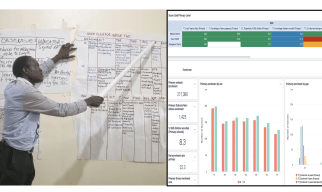
This project addresses the lack of “turnkey” education management information systems in the education sector that can be used sustainably and at scale in low-income countries. It aims to strengthen the capacity of ministries of education in Uganda, Togo, and the Gambia to adapt open source health information systems to local and national education sector needs for better policy formulation, planning, and implementation. More specifically, the project seeks to leverage a proven innovation in the health sector that will effectively enhance demand for data and information use at all levels of the education system, and provide innovations that make the display and interactive use of digital data in management information systems accessible and useful to decision-makers.
This project will involve an action research approach and it will use community stakeholder mobilization, participatory development of data visualization tools for schools and communities, and test and evaluate innovations in two districts in Uganda. The project builds on a pilot project in the Gambia and Uganda. This project will continue work in those countries, as well as Togo.
Project Stats